
Last updated
What does OSHA require for farm sanitation?
Field sanitation for hand-labor agricultural work falls under OSHA 1928.110, which calls for potable water, toilets and handwashing within a quarter mile of where employees are working, at a rate of one facility per 20 employees. That is a tighter walk requirement than most construction sites see under OSHA portable toilet requirements, so placement matters more on spread-out acreage than on a compact lot. A 60 to 70 gallon holding tank on a standard porta potty rental covers a small labor crew for about a week under normal use, based on the ANSI/PSAI Z4.3 baseline of one service per week for up to 10 users over a 40 hour week. Bigger crews or hot, high-use stretches during tobacco setting or hay season mean tighter service intervals, not a bigger tank. We plan the route so a unit sits near the barn, the loading area or wherever the crew actually breaks, not just wherever the truck can reach easiest. For farms running horse operations near Lexington-Fayette, we also place units near paddocks and wash stalls where hands are working most of the day. If your operation also needs handwashing station rental units alongside toilets, we bring those on the same delivery run to save a second trip.
How many units does a farm actually need?
One unit per 20 workers is the OSHA 1928.110 floor, but real farm layouts push that number around fast. A 300 acre operation with three separate work zones needs units split across those zones, not clustered at the entrance, because the quarter mile rule is measured from where people work, not from the driveway. We size crews the same way we size any labor site, similar to the logic in how many porta potties do I need, then adjust for walking distance across open ground. Seasonal harvest crews that swell for a few weeks are common in this part of Kentucky, and a short-term standard porta potty rental or an emergency porta potty rental covers that spike without locking the farm into a long contract. Operations near Nicholasville, 15.3 miles southwest of Lexington-Fayette, or Versailles, 15.7 miles west, run similar horse and grain operations and use the same placement math. If the farm hosts occasional public events, a barn wedding or a fall festival, that is a different sanitation load than daily field labor, and we plan those separately under event restroom rental or wedding restroom rental rather than folding it into the labor count.
Where should units go on farm ground?
Placement on farm ground comes down to firm footing, truck access and a walk that actually meets the quarter mile mark, not just a spot near the gate. ADA Standards section 302.1 calls for stable, firm and slip resistant surfaces, which matters on wet pasture edges as much as it does on a paved lot. We look for gravel pads, packed lanes or barn aprons rather than soft turf that ruts under a service truck. Our porta potty placement guide walks through the same footing and access questions we ask on every farm site visit. Farms running equipment near grain bins or equipment sheds should keep units clear of gate swing and turnaround paths, since our trucks need workable clearance to service tanks on schedule. Winter pumping on farm ground brings its own issues, covered in porta potty in winter, since frozen access lanes can delay a scheduled stop. Operations closer to Winchester, 18.0 miles east, or Georgetown, 19.9 miles north, deal with the same seasonal mud and freeze cycles we plan around here in Lexington-Fayette. For farms that also run a septic system for a farmhouse or bunkhouse, pairing routine septic pumping service with your porta potty schedule keeps every wastewater need on one visit.

Pricing for farm rentals
| unit | duration | typical price |
|---|---|---|
| standard | week | $200 |
| standard | month | $200 |
| deluxe | week | $250 |
| service_fee | week | $60 |
Full detail on how these numbers scale with crew size lives on our porta potty rental cost and monthly porta rental pages.
Do I need a permit for a porta potty on farm property?
Placement on private agricultural land is usually simpler than a public right of way, but rules still vary by parcel and zoning. Confirm with the city before finalizing placement near any road frontage. See porta potty permit requirements for what to check before delivery.
How often are units serviced on a farm during harvest?
Weekly is the baseline under ANSI/PSAI Z4.3, but harvest crews often need twice-weekly service once headcount climbs. We adjust the route based on actual crew size, not a fixed calendar, and can add stops mid-season. See how often are porta potties cleaned.
Can I get a portable sink for a farm labor crew?
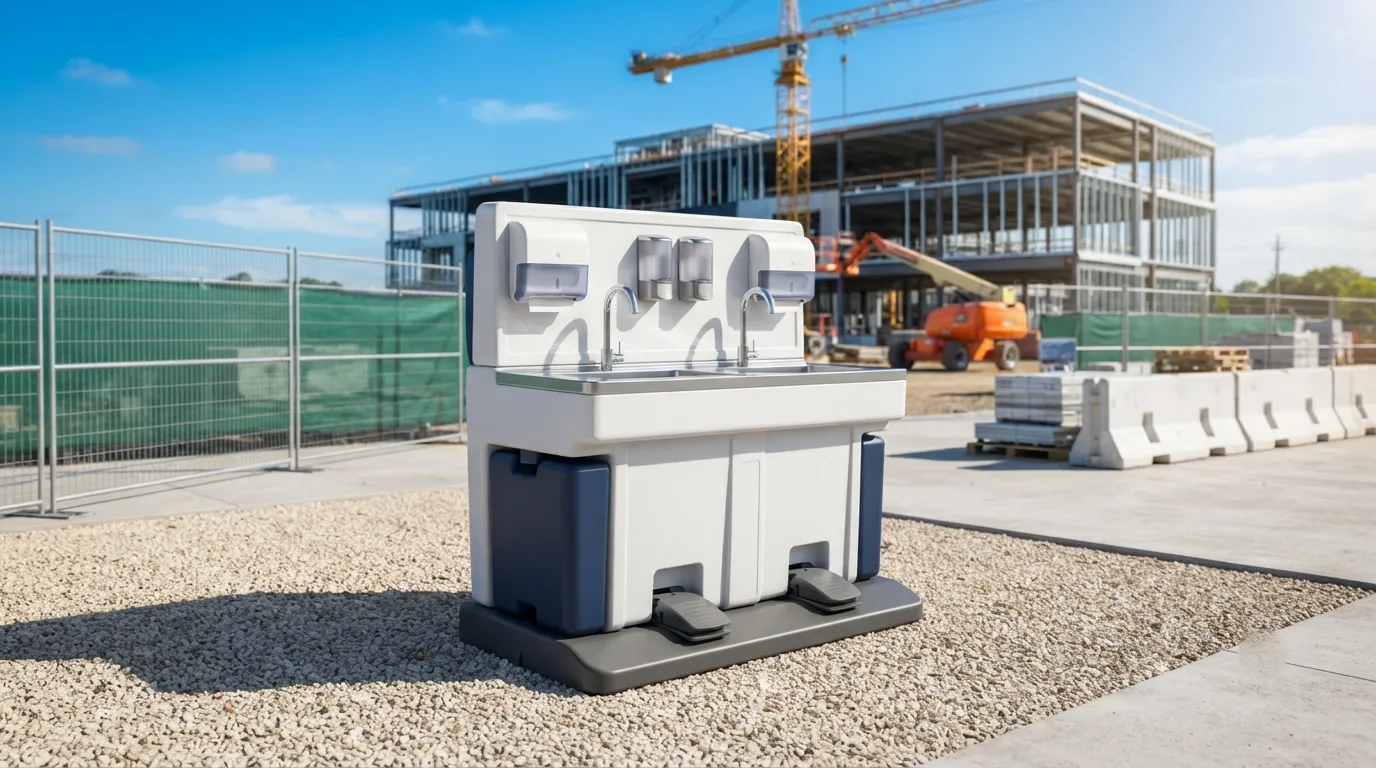
Yes. A portable sink rental unit pairs well with field toilets and meets the water access piece of OSHA 1928.110. We deliver both together on one run to keep setup simple for crew leads.
What if my farm crew works with pesticides or herbicides?
OSHA 1926.51(f)(1) requires washing facilities where workers apply pesticides, herbicides or similar contaminants. A handwashing station stationed near the mixing or loading area covers that requirement directly, separate from general field toilets.
Do you serve farms outside Lexington-Fayette itself?
Yes. We run routes out to Paris, 17.0 miles northeast, and Richmond, 26.9 miles south, along with the rest of the county. Check service areas for the full coverage map before requesting a delivery date.
Next step
Get a delivery date
Tell us the address, the dates and the headcount. We size the order and confirm the route.