
Last updated
Do you need a permit for a portable toilet in Lexington-Fayette?
For a private job site, a backyard renovation or a fenced construction lot, most placements do not trigger a permit review at all. Lexington-Fayette Porta Pros delivers to hundreds of driveways, farms and job sites across the county every year without a separate sanitation permit, because the unit sits on private ground the whole rental. The picture changes once the unit sits in a public right of way, on a sidewalk, or blocks a curb lane. That kind of placement needs confirming with the city, and we will not guess at a rule number that has not been verified. If your project also needs a temporary fence rental, a light tower, or a temporary power pole, check those separately, since power pole work often runs through its own inspection path. Start with our porta potty placement guide to sort private-lot placement from street placement before you call anyone.
Where can you legally place a porta potty on a job site?
Placement rules are mostly about access and ground, not paperwork. ADA Standards section 403.5.1 calls for a 36 inch clear route to an accessible unit, and section 304.3.1 requires a 60 inch turning circle in front of it, so leave real space, not a gap between stacked materials. OSHA 1926.51(c)(1) sets the toilet count itself: one facility for 20 workers or fewer, then one toilet and one urinal per 40 workers as the crew grows, up to 200. Ground matters too. ADA section 302.1 wants the surface stable, firm and slip resistant, which rules out loose gravel or soft mud under the door. For delivery, a standard unit runs about 44 by 48 inches on the ground and 92 inches tall, so our driver needs a clear path in, not just clear space once it lands. Compare a standard porta potty rental against a deluxe flushable porta potty or an ADA accessible porta potty before you lock in a spot, since accessible units need extra clearance the standard unit does not.
Do you need a permit for a dumpster in the street?
This is the question that trips people up most, and it is also where Jersey City, Delaware and plenty of other cities differ from each other and from Lexington-Fayette, so do not assume a rule from one place carries over here. A dumpster parked entirely on your own driveway or lot typically needs nothing extra. A dumpster set at the curb or on pavement is a different situation, and that placement needs confirming with the city before the truck shows up, because street obstruction rules vary block to block. A roll-off dumpster rental needs about 60 feet of straight clearance behind the truck for delivery, curb or driveway, so measure your access before you book. If you are unsure which dumpster size fits the space, start smaller. See our dumpster permit requirements page and our dumpster rental cost guide, and check what cannot go in a dumpster before loading, since banned materials can hold up pickup regardless of permit status.
What sanitation rules apply once the unit is on site?
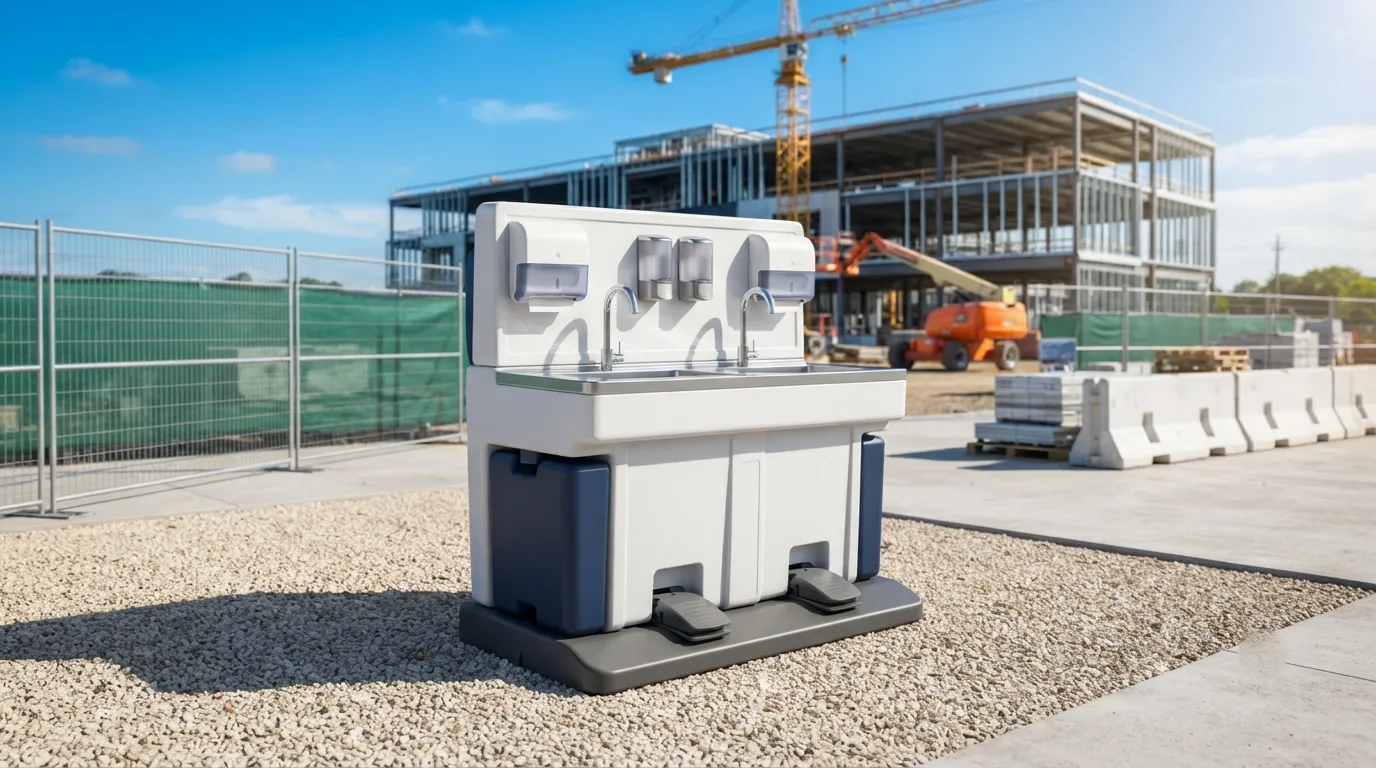
Placement is one layer. Servicing and sanitation are the other, and those rules do not change based on where the unit sits. ANSI/PSAI Z4.3 sets the baseline service interval at once a week for up to 10 users over a 40 hour week, which is why we ask about headcount before quoting a schedule; see how often are porta potties cleaned for the detail. OSHA 1926.51(a)(1) requires an adequate supply of potable water at the site regardless of toilet count. If your crew works with paints, coatings, herbicides or insecticides, OSHA 1926.51(f)(1) requires washing facilities for that contact, separate from the general toilet count, and 29 CFR 1910.141(d)(2) requires soap and towels or a hand dryer at any washing station, not sanitizer alone. A handwashing station rental or portable sink rental covers that gap cheaply. For accessible clusters, ADA section 213.2 requires at least 5 percent of units to be accessible, never fewer than one, so a site with a dozen standard units still needs one ADA unit. Full detail lives on our OSHA portable toilet requirements and ADA restroom requirements pages, and handwashing station requirements covers the washing side.
| unit | day | week | month |
|---|---|---|---|
| standard | $100 to $350 | $130 to $500 | $125 to $325 |
| ada | $200 to $400 | $240 to $400 | not sold monthly |
| deluxe | $85 to $1200 | $150 to $290 | not sold monthly |
Pricing detail lives on our porta potty rental cost, porta potty rental per day and monthly porta potty rental pages. For a broader look at how many units your headcount actually needs, see how many porta potties do I need.
Does a residential driveway placement need a permit?
Usually not. A unit sitting fully on private property, away from the sidewalk and curb, is the simplest placement Lexington-Fayette Porta Pros handles. Confirm your property line if the driveway is narrow, since a unit that overhangs the sidewalk shifts into right-of-way territory.
Can I place a porta potty on the street for a party or event?
Only with confirmation from the city first. Street placement is treated differently than a private lot almost everywhere, including here, and Lexington-Fayette has not published one rule we can cite. Call before the event, not after delivery.
What happens if a dumpster or porta potty blocks a sidewalk?
Blocking a sidewalk or curb lane is the kind of placement that draws attention fastest, permit or not. Leave the ADA-required 36 inch clear route past any unit, and keep dumpster wheels and porta potty doors off the walking surface entirely.
Do agricultural sites need a permit for field sanitation?
Farm sites follow OSHA 1928.110, which calls for potable water, toilets and handwashing within a quarter mile walk of hand-labor employees, at one facility per 20 workers. See our farm and agricultural restrooms page for setup details specific to that standard.
Does a temporary power pole need its own permit?
Often yes, separate from any sanitation question. Power pole work usually runs through an electrical inspection path rather than a sanitation one. Check our temporary power pole page and confirm directly with the city before your electrician schedules the drop.
Next step
Get a delivery date
Tell us the address, the dates and the headcount. We size the order and confirm the route.