
Last updated
How does a standard porta potty actually work?
Picture a booth about 44 by 48 inches on the ground and 92 inches tall, sitting over a holding tank instead of a sewer line. No water goes in, no water goes out. When you use it, waste drops straight into that tank and mixes with the blue liquid, which knocks down odor and starts breaking material down chemically. There's no flush, no float valve, nothing mechanical to fail in cold weather the way pipes can. That's why you'll see standard porta potty rental units on job sites and at outdoor events across Lexington-Fayette without a single hose run to the property. A construction worker heading to the porta john rental on a job site doesn't need to know any of that. He just needs the unit close enough to reach on a break, which is why placement guides matter more than people expect. Service crews pump the tank, usually weekly under the ANSI/PSAI Z4.3 baseline interval for up to 10 users over a 40 hour week, and top off the chemical. Heavier-use sites need more frequent pumping, which is a scheduling question, not a design question.
How do flushable porta potties work?
A flushable, or deluxe, unit adds a small onboard freshwater tank and a foot pump or handle that pushes a rinse of water into the bowl, carrying waste down into the same kind of holding tank below. It feels closer to a home bathroom. Some deluxe models also have a sink built into the same unit, fed by that same freshwater reservoir. These cost more to rent than a standard unit, reflecting the added plumbing, and you'll see that spread in the deluxe flushable porta potty lineup. They're common at weddings and corporate events where guests expect something closer to a real restroom. For anyone comparing options before a wedding restroom rental or a festival restroom rental booking, the flush mechanism is the main functional difference, not the exterior.
How does a portable sink work?
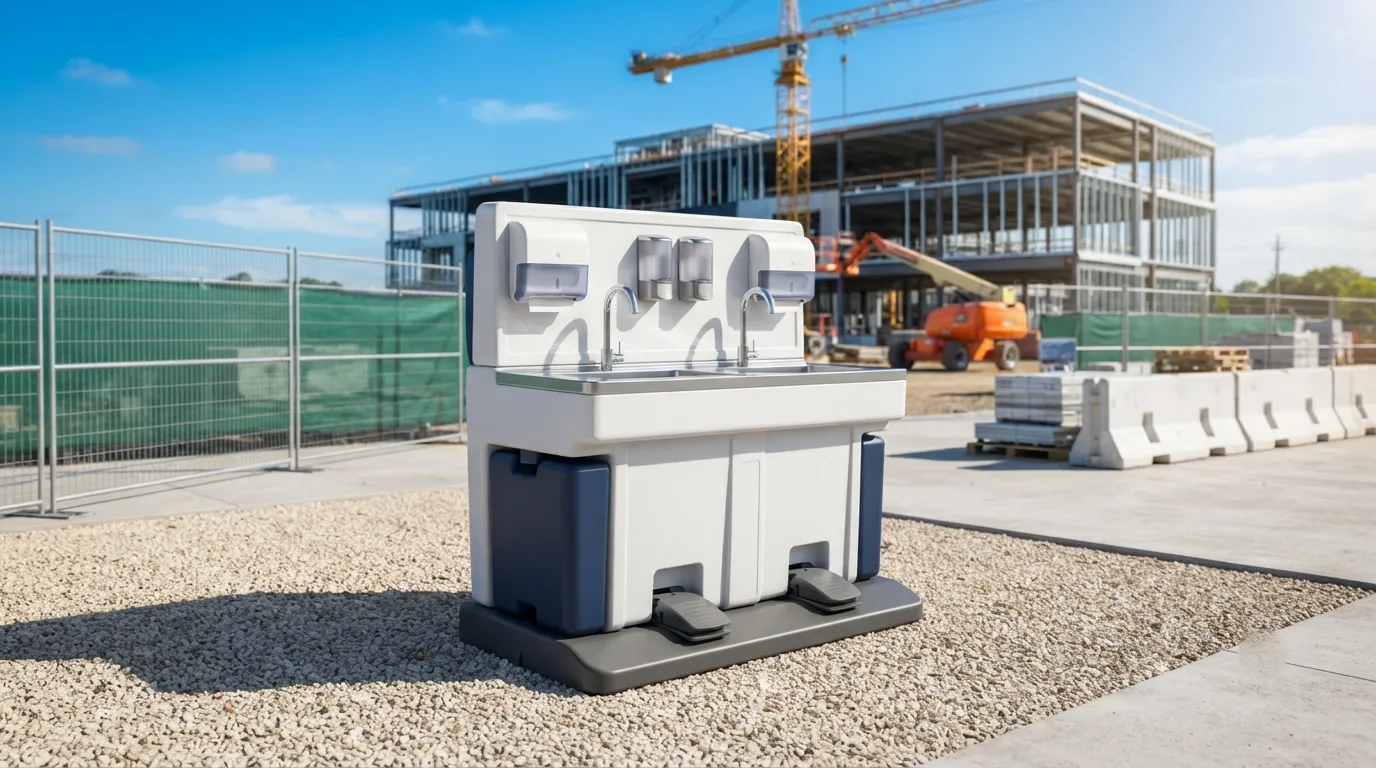
A portable handwashing station holds fresh water in a top tank, gravity-feeds it through a spigot or foot pump into a basin, and drains gray water into a tank below, no hose bib needed. Soap dispensers mount on the side. Under 29 CFR 1910.141(d)(2), washing facilities need actual soap and towels or a hand-drying device, not just sanitizer, so a compliant station on a job site has to include both. Hand sanitizer stations are a separate, lighter product and don't satisfy that standard on their own; see the difference laid out on the hand sanitizer station rental page versus full handwashing station rental units. For anyone doing painting, coating, or pesticide work, OSHA 1926.51(f)(1) specifically requires washing facilities for employees applying paints, coatings, herbicides or insecticides. That's a narrower rule than general sanitation and it's worth checking against the handwashing requirements page before a bid goes out.
Do camping porta potties work the same way?
Camping units work on the same tank-and-chemical principle, just smaller and self-contained for one or two people at a time rather than a crew. Most are a simple bucket-style or cassette tank you empty yourself at a dump station, no service visit required. For group camping or a longer stay, a rented unit from camping porta potty service works more like a job-site unit: a real holding tank, scheduled pumping, and no carrying anything anywhere. That matters for extended trips near Lexington-Fayette where a five-person group can burn through a bucket-style tank in a day. If you're weighing a rental against buying a cassette toilet, the math usually favors renting once you're past a weekend.
What chemicals go in a porta potty?
The blue liquid in a porta potty tank is a deodorizing and digesting chemical, similar in principle to what's used in septic tank cleaning, though septic chemicals are formulated for a buried tank rather than a portable one. Searching "portable toilet chemicals near me" usually turns up the same suppliers who service the units, since most rental companies handle chemical refill as part of the pumping visit rather than selling it retail. A residential septic tank, separately, is typically pumped every 3 to 5 years depending on tank size and household size, which is a different maintenance rhythm entirely from a rented unit. If your question is really about a septic system rather than a rental unit, the septic pumping service and how often to pump a septic tank pages cover that separately from anything on this page.
| unit type | day | week | month |
|---|---|---|---|
| standard | $100-$350 | $130-$500 | $125-$325 |
| deluxe | $85-$1200 | $150-$290 | n/a |
| ADA | $200-$400 | $240-$400 | n/a |
For job sites, OSHA 1926.51(c) sets the ratio: one toilet for 20 or fewer workers, scaling up from there, and that number drives most of the sizing questions on how many porta potties do I need. Crews working near Nicholasville, about 15.3 miles southwest of Lexington-Fayette, or out toward Winchester, 18.0 miles east, still fall under the same federal ratio regardless of which side of the county line the site sits on.
How often do porta potties get pumped?
Under the ANSI/PSAI Z4.3 baseline, one service visit a week covers up to 10 users over a 40 hour week. High-traffic sites need more frequent visits. See how often are porta potties cleaned for scheduling by crowd size.
Do porta potties smell if they're maintained?
Properly serviced units shouldn't smell much between visits, since the deodorizing chemical is doing its job and the tank stays sealed. Heat and missed pumping visits are the usual causes of odor. Details are on do porta potties smell.
Can a porta potty freeze in winter?
Yes, standing liquid in the tank can freeze in hard winter cold, which slows breakdown but doesn't stop the unit from functioning. Antifreeze-rated chemical blends help. See porta potty in winter for what changes seasonally.
Are ADA-accessible porta potties different inside?
Yes. ADA Standards section 304.3.1 requires a 60 inch turning circle inside, and section 404.2.3 sets a 32 inch minimum door width, both wider than a standard unit. Full specs are on ADA accessible porta potty.
What's the difference between a porta potty and a restroom trailer?
A porta potty is a single sealed unit with no water hookup. A restroom trailer has multiple stalls, running water, and often climate control. Compare options on restroom trailer rental before booking a larger event.
Next step
Get a delivery date
Tell us the address, the dates and the headcount. We size the order and confirm the route.